
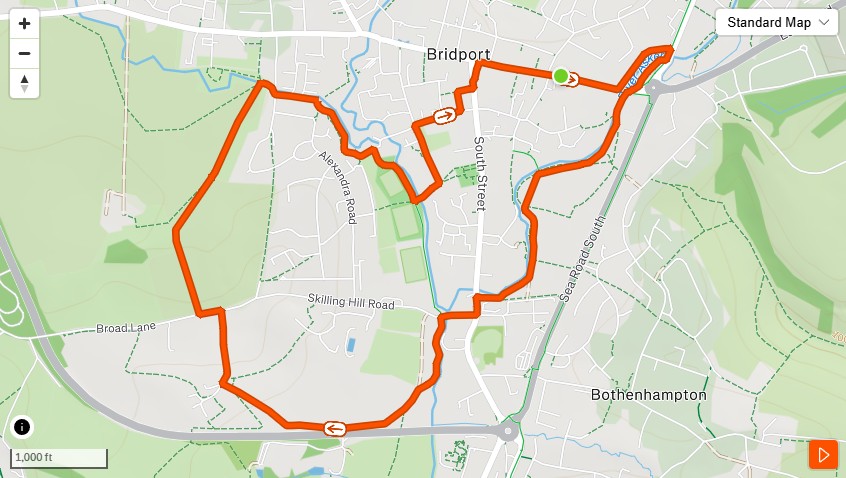
This one is different. No coast path. No cliff climbs. No views that require earning. TOL Route D stays entirely within Bridport — a loop through the town’s parks, riverside paths, and streets that most people who live here have never quite joined up into a single route. It ends — or begins, depending on how you think about these things — in a meadow full of sculpture that most people don’t know exists.
It’s 3.34 miles. It’s flat. It’s the one we’ve been keeping back for the moment when someone says they’d like to come along but isn’t sure they’re ready for Golden Cap.
What the route does
The route starts in the town centre and loops west and north before returning south through the riverside meadow and back. One car. No logistics. Easy to explain, easy to follow, easy to run.
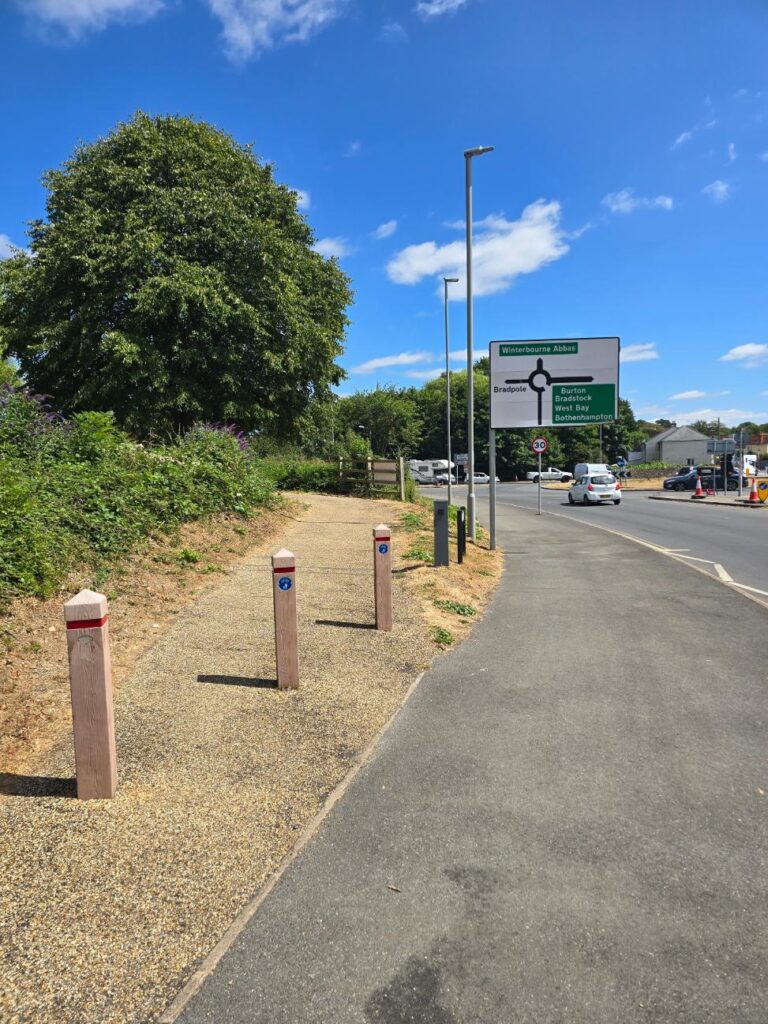
The Old Line entry from the East Road roundabout. Wooden bollards, the path heading south into the sculpture meadow, the cycling signs marking the way. This is where the route ends — and the point that makes it worth doing.
The first half works through Bridport’s western residential streets — the roads above South Street and Alexandra Road that most people only ever drive along. On foot they’re different: quieter, better proportioned, with glimpses through to the hills beyond town that the car makes invisible. The one gradient worth noting sits here, a brief climb on the loop’s northwest arc — the only honest effort on an otherwise level route. It lasts about a minute. Nobody has ever complained.
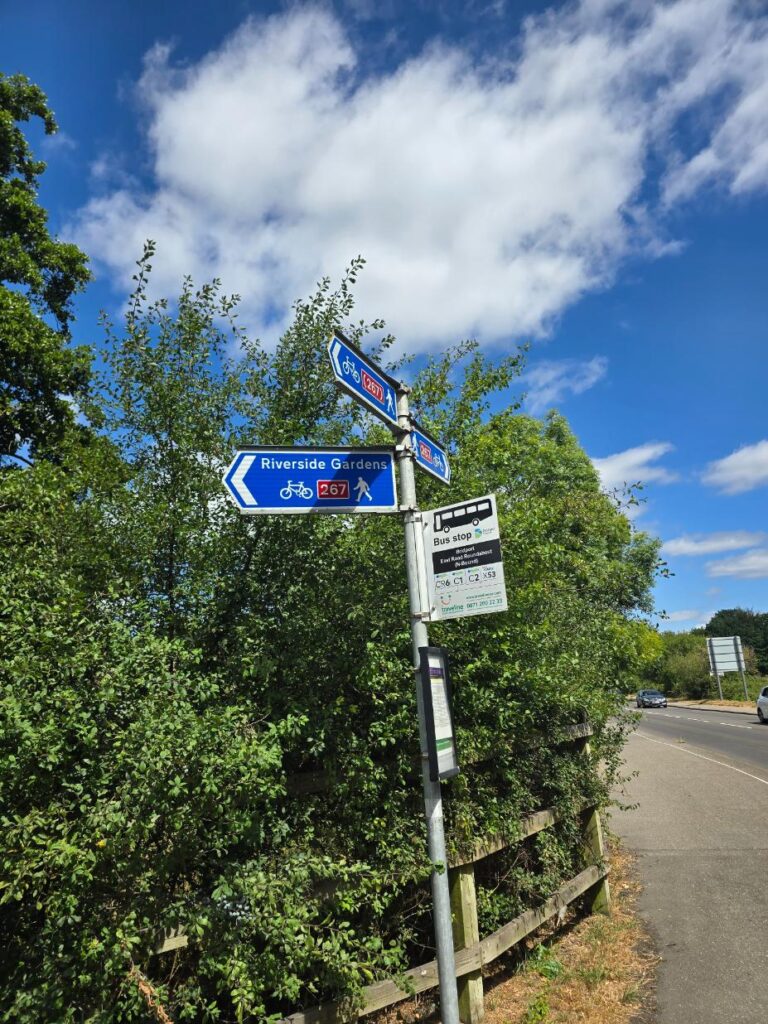
The Riverside Gardens sign. Cycle Route 267. This is where the route turns back south and the character changes.
From the northern apex the route descends back toward town and picks up the riverside path — Cycle Route 267, signed as Riverside Gardens — that brings you east and then south alongside the River Brit. This is where the route stops being a town run and starts being something else.
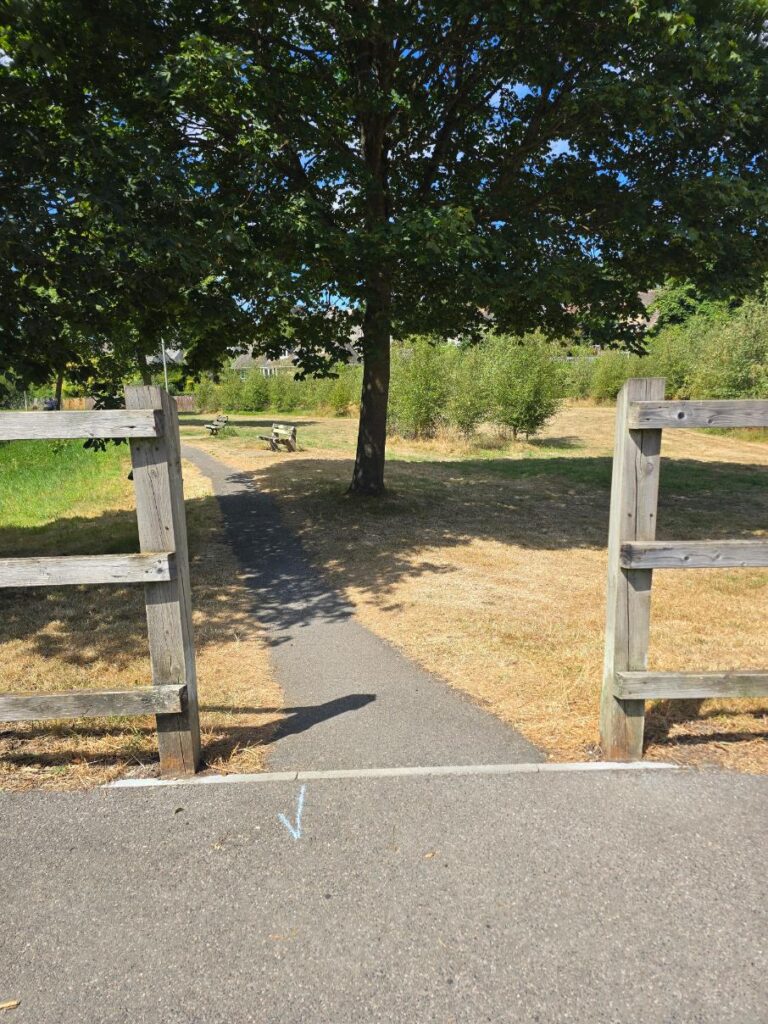
The park entrance. Wooden fence posts, a tree providing shade, benches visible beyond. The meadow opens up on the other side.
The gate opens into the sculpture meadow. You don’t see it coming, which is part of the point.
The sculptures
Bridport’s riverside meadow holds one of the more quietly remarkable collections of outdoor sculpture in Dorset. No admission. No signage. No café. Just a sequence of works distributed through the grass and scrub along the River Brit, a collaboration between the town and local and regional artists that has been growing for years without much fanfare.
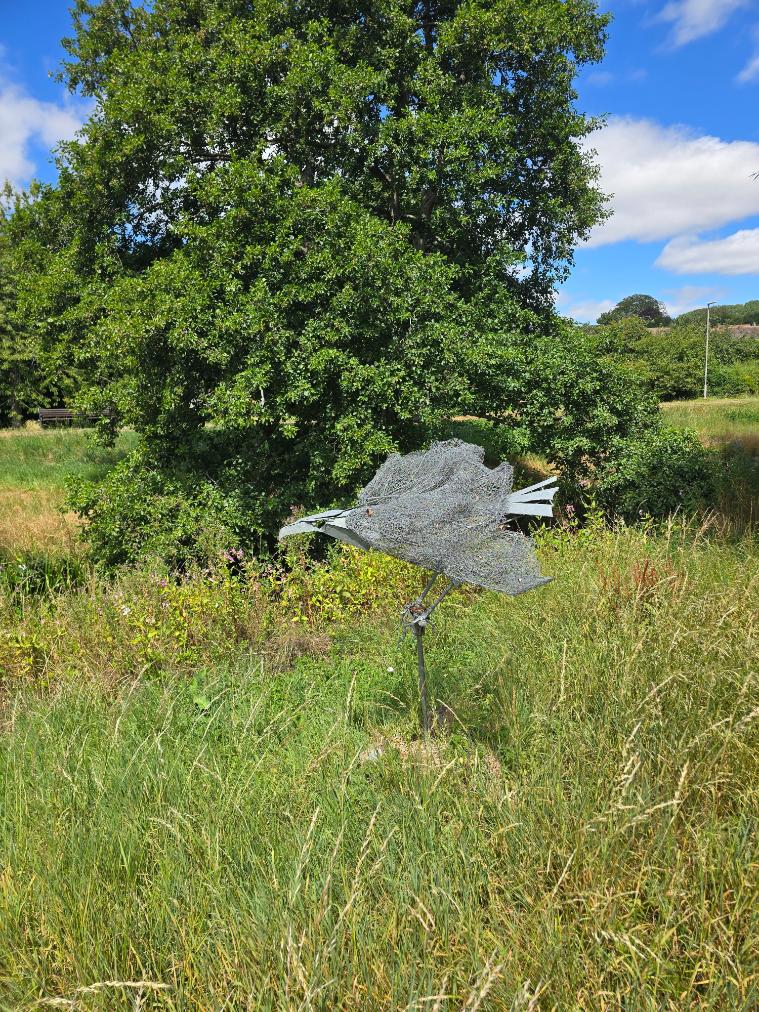
Wire mesh figure — a bird form, perhaps a heron, constructed from galvanised wire and steel rod. Standing in the long grass by the river. The wire catches light differently at different times of day.
The materials are the first thing you notice. Rust iron. Galvanised steel. Cast bronze. Wire mesh. Each one weathers differently, each one has a different relationship with the meadow around it. Some are figurative — human forms in various states of abstraction — and some are harder to read: a rusted sphere on a twisted stem that might be a seed head or a flame, depending on the angle and what you’re inclined to see.
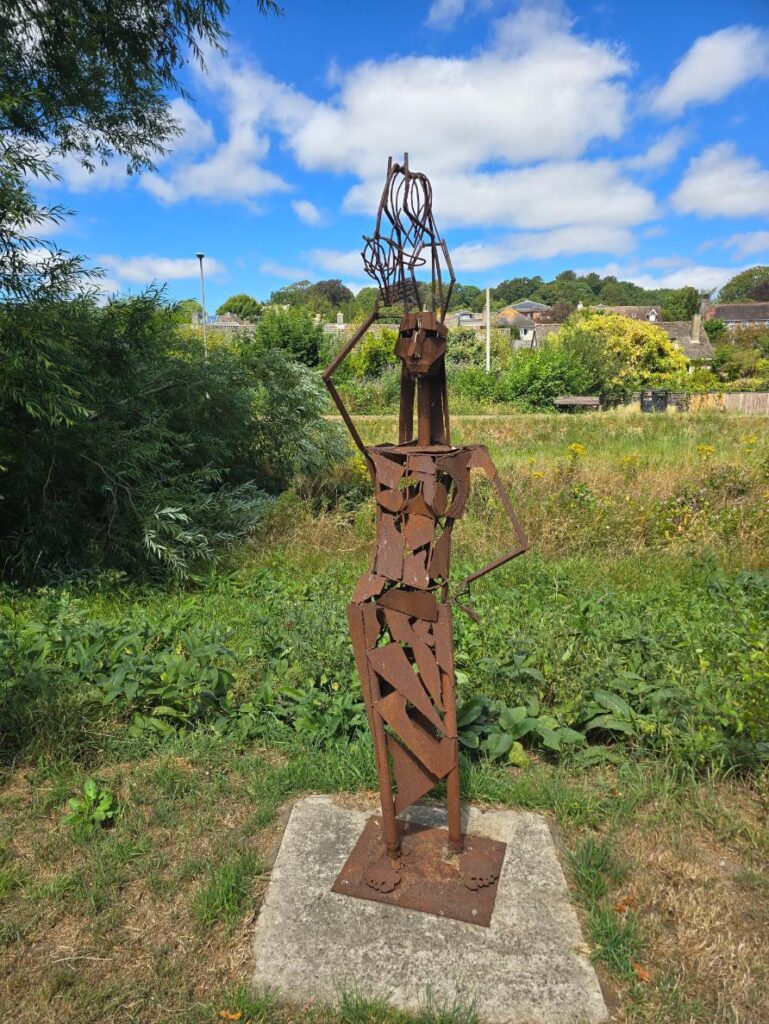
Bronze female figure, standing. Dark patina against the wildflower meadow. The ragwort in yellow behind her. One of the older pieces on the trail.
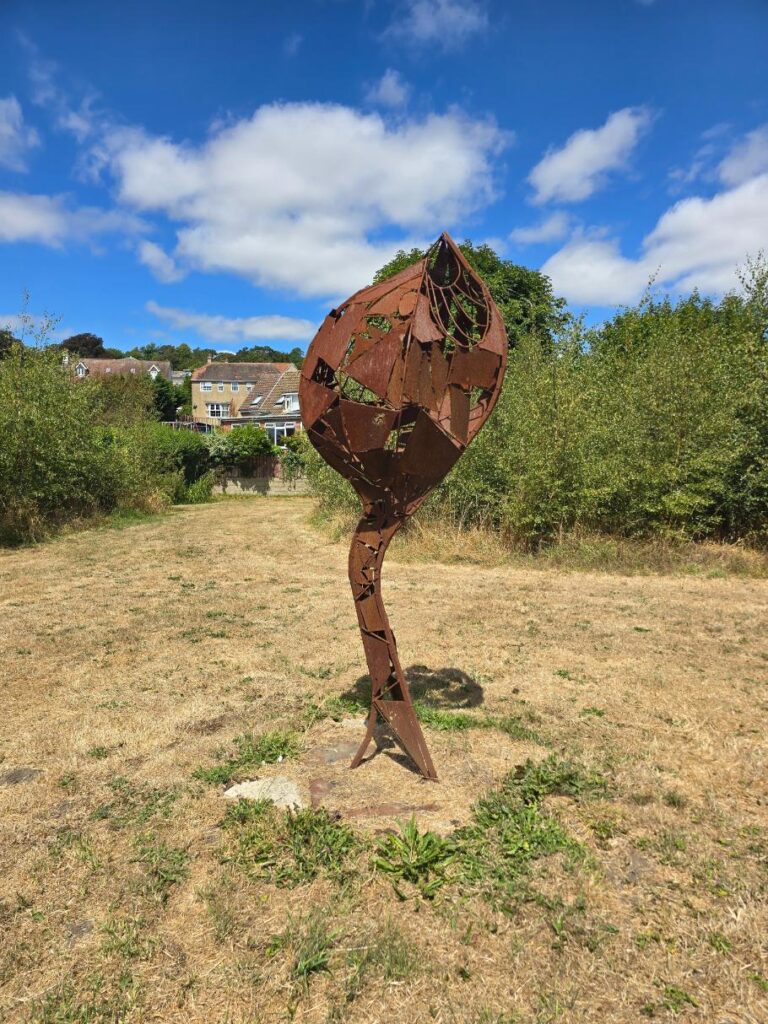
Rust-iron figure — tall, angular, abstract. Constructed from welded plate steel, the rusted surface warm in summer light. The residential rooftops of Bridport visible above the treeline behind it.
The wire mesh pieces are particularly good — technically ambitious and, in the right light, almost transparent. One piece in particular shows two figures together, rendered in fine galvanised wire, each one detailed enough to read as individual and connected at the same time.
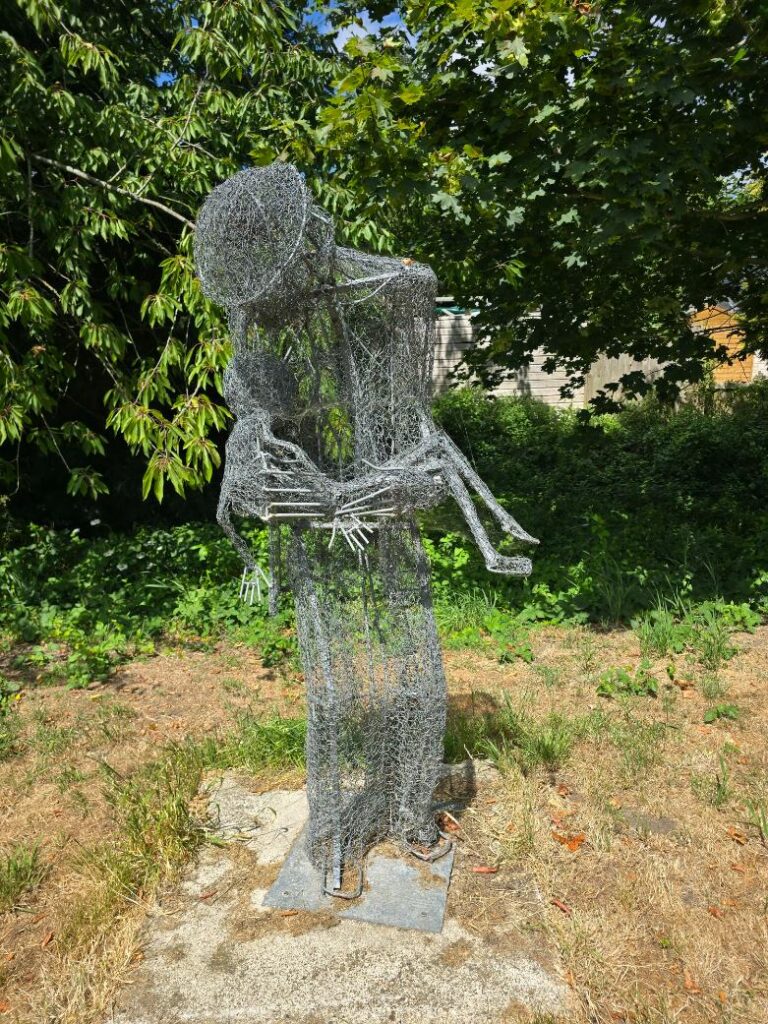
Wire figures — two forms together, constructed from fine galvanised mesh. The detail is extraordinary up close. The kind of piece you walk past quickly and then stop and go back.
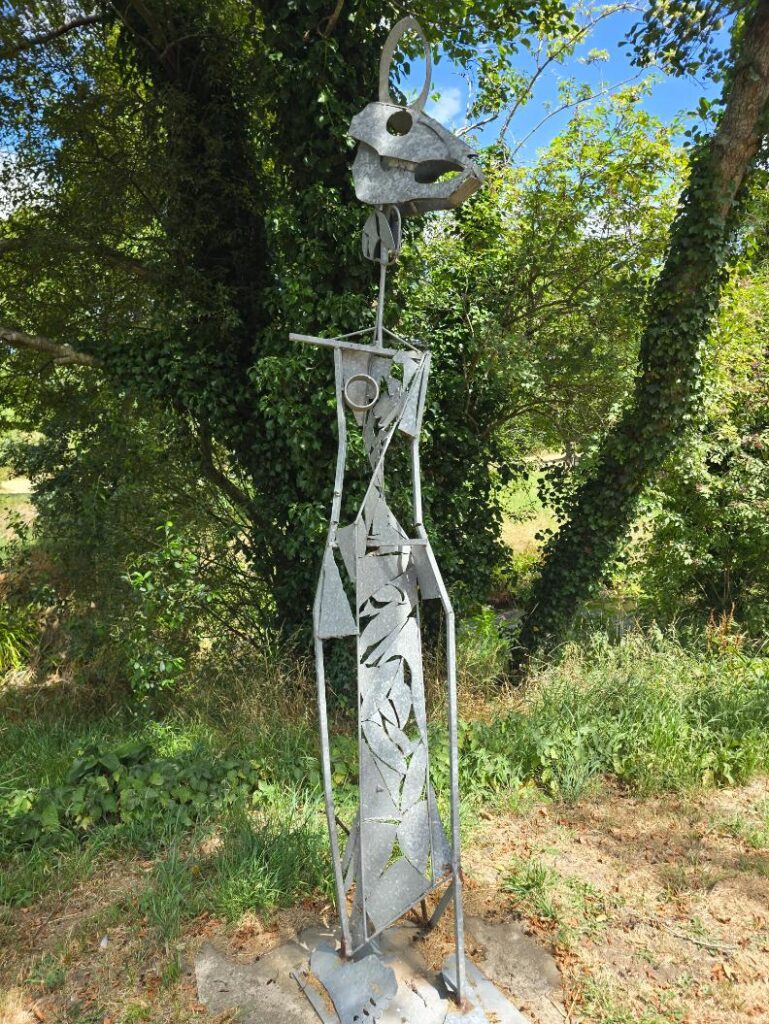
Galvanised steel figure with geometric head — abstract, tall, solitary against the summer ivy. The river running behind it. One of the more recent additions.
Near the southern end of the meadow, a bronze group piece gathers three figures together in a way that invites the kind of close looking you don’t usually do on a run. There’s also a single standing form — dark patina, elongated neck, a cavity in the torso that holds a smaller figure inside. That one tends to stop people.
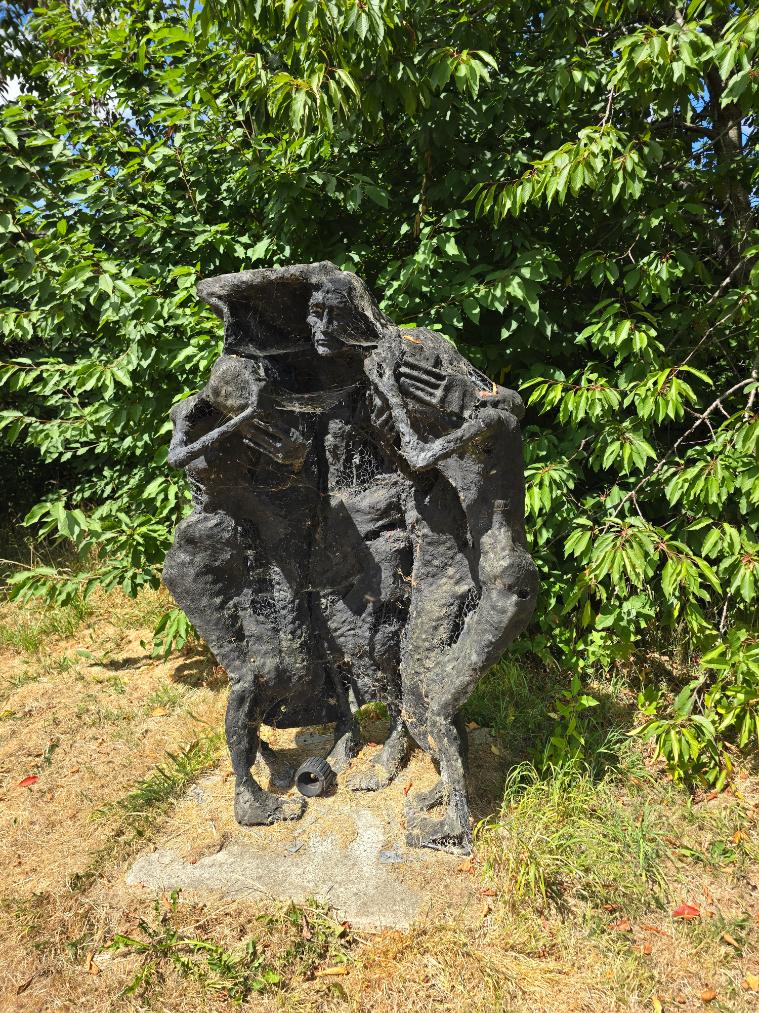
Bronze group, three figures. Dark patina, chestnut trees behind. The route passes close enough to read the detail.
The sculpture trail doesn’t announce itself. There are no interpretation panels. You either notice the works or you run past them. On a group run, the works become a reason to regroup, to stop, to say something or say nothing. They’re well-spaced for that.
The logistics
One car. One car park. The route loops back to its start.
The town centre has several options — Bucky Doo Square, the main car park off St Andrew’s Road, or street parking on South Street. The route is accessible from multiple points in the centre, so the start can flex to suit.
195 feet of elevation over 3.34 miles makes this the flattest TOL route by some margin. Strava rates it Easy and, for once, Strava is right. The surface is mixed — tarmac path for most of it, with some gravel and packed stone through the meadow section. Road shoes are fine. The Old Line path is wide and well-maintained throughout. In wet weather the meadow section can be soft underfoot but nothing that presents a problem.
Running time: 30–40 minutes at an easy pace. Walking time: around an hour, comfortably. Either works. Both work together.
This is the route for the first session. For the runner who hasn’t run in a year. For the member who joins the walk and wonders what the runs are like. For the Tuesday morning when the weather is perfect and you want something that ends in coffee rather than a hill.
What TOL looks like on this one
Same principles, smaller radius. Headphones off. Nobody charges ahead. The group stays together through the meadow — not because it’s hard, but because the sculptures are better with company, and because pointing things out is better than walking past them alone.
The pace is the pace of whoever needs it most. On a 5k loop that’s never going to be a problem.
This route works as a run or a walk. It works as an introduction and as a regular. It works in any season, though in summer the meadow is at its best — the long grass, the wildflowers, the light on the water — and in winter the sculptures are a different thing entirely, the wire pieces showing against bare scrub, the bronze going darker and heavier with the cold.
The route hasn’t been walked as a group yet. It goes out for a solo run first to confirm the logistics and check the detail. That’s how TOL routes get made.